Meet the team
| Site: | Plate-forme d'Enseignement de Nantes Université |
| Cours: | Lexhnology (Prototype 2) |
| Livre: | Meet the team |
| Imprimé par: | Visiteur anonyme |
| Date: | samedi 30 mai 2026, 13:08 |
Description
Meet the people behind the Lexhnology project, across partner universities.
Université de Lorraine
| Alex BOULTON | Warren BONNARD | Carmenne KALYANIWALA |
| Alex Boulton is Professor of English and Applied Linguistics and former director of the ATILF research group (CNRS & Université de Lorraine). He is editor of ReCALL (published by CUP, ranked 4th in Linguistics worldwide) and is on committees for several other scientific journals and associations. With over 100 publications, particular research interests centre on corpus linguistics and potential uses for ‘ordinary’ teachers and learners (aka data-driven learning – DDL), including several syntheses in recent years. He is currently exploring ways in which GenAI may be integrated to this approach. He teaches English to students in various disciplines, as well as corpus linguistics, applied linguistics and research methodology. |
Nantes Université

| Mary Catherine LAVISSIERE | Johannes DAHM | ||
 |
 |
||
|
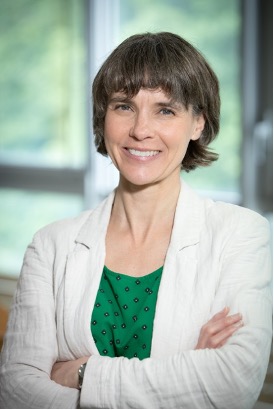
Mary Catherine Lavissière is Associate Professor (HDR) of Applied Foreign Languages at Nantes Université. She is principal investigator for the nationally-funded interdisciplinary research project Lexhnology ANR-22-CE38-0004. Her publications in international journals focus on discourse units in legal texts and their application in discourse analysis and language learning. She is on the board of several journals on linguistics and specialized language (ELAD-SILDA, JLL). |
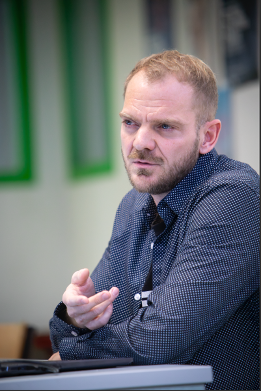
Johannes Dahm is an associate professor (Mcf, HDR) at the University of Nantes (LEA/Department of German Studies) and a member of the research laboratory CRINI – UR 1162. His research focuses, on the one hand, on the fields of discourse linguistics (specialized discourses, discourses of heritage), cognitive linguistics (frame semantics, construction grammar), and corpus linguistics. He is also interested in the current perception and reception of architectural heritage in cross-border regions in Central Europe. |
| Anas BELFATHI | |||
 |
|||
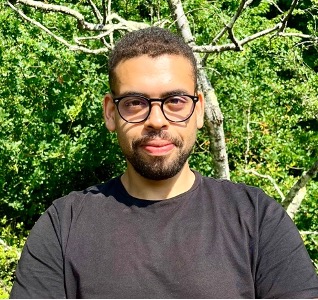
| Anas Belfathi is a PhD student at LS2N (University of Nantes). He holds a Master’s degree in Data Science from Sorbonne University. His research focuses on adapting large language models to domain-specific applications, particularly in legal AI, document understanding, and information extraction from complex texts. During his journey, he has published papers at ACL, EACL, ICAIL, JURIX, and other venues. |
Université de Toulouse

Other contributors
| Deborah BOUDZOUMOU | Saint Joannes MONENGUE | ||
 |
 |
||
|
Deborah Boudzoumou’s academic career has been shaped by intersection of several worlds: the demanding and structured world of law and the vast and ever-changing world of language. During her double degree in Law and Applied Foreign Language in Nantes, she participated in the Lexhnology project in May 2024 as an annotation intern. This immersion in research has reinforced her desire to work in spaces where legal precision, linguistic finesse and creative energy converge. |
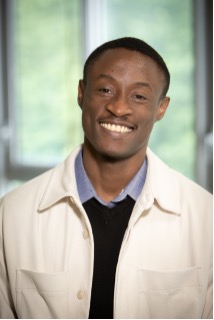
Saint Joannes Monengue is a linguist and aspiring NLP researcher currently completing a Master’s degree at Rennes 2 University. His research explores how natural language processing can support the automatic extraction and complexity analysis of nominal constructions in learner and native English corpora. As an intern within the CRINI team, he contributes to the Lexhnology Project by managing and structuring datasets, developing Python scripts to automate workflows, and improving data processing pipelines. His interdisciplinary background bridges applied linguistics, NLP, and information systems, with a strong interest in using technology to advance innovative language research. |