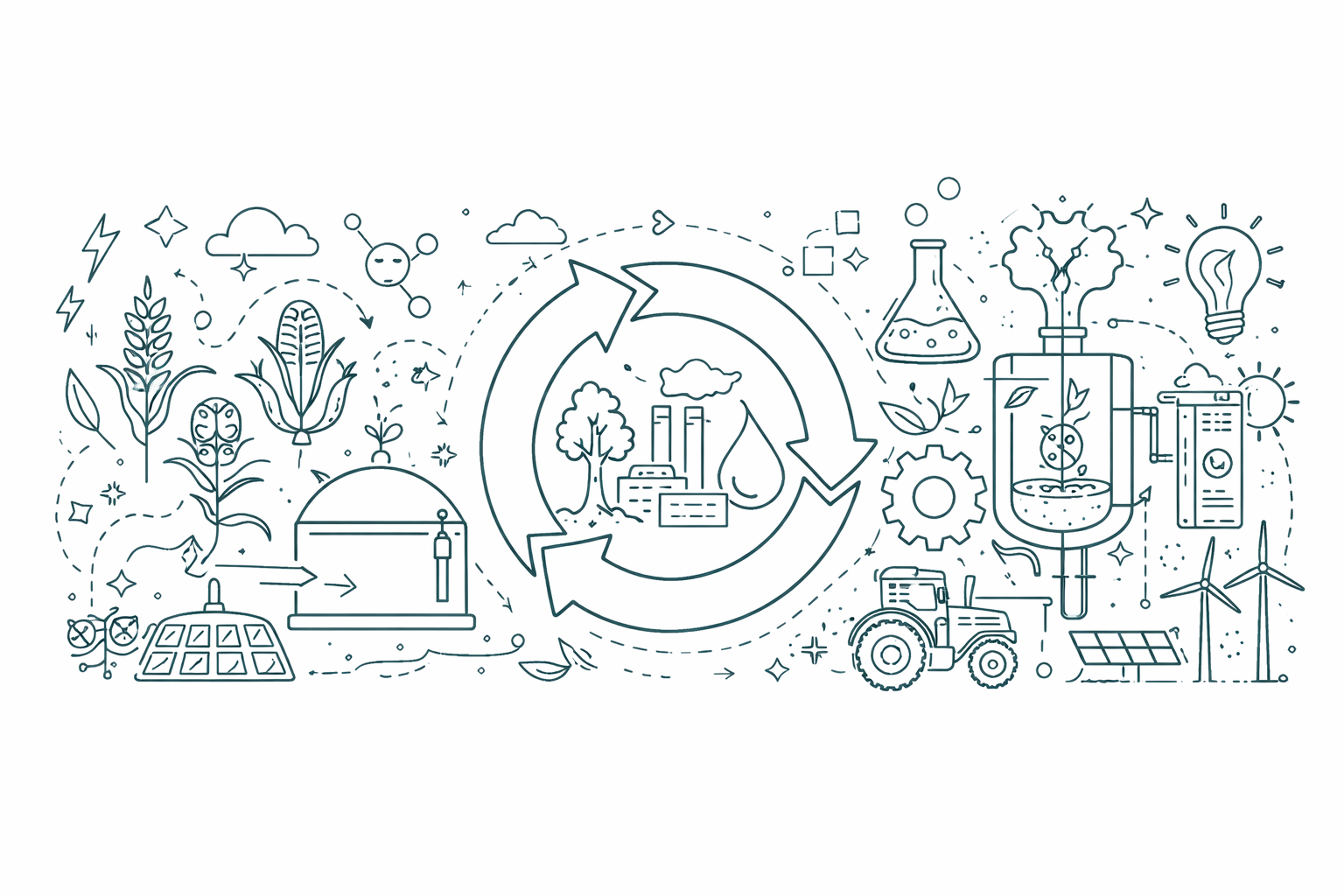
This course introduces students to the principles, methods, and decision-making tools of the Circular Economy (CE), with a focus on process design, system thinking, and quantitative assessment. The objective is not only to understand CE as a sustainability concept, but to develop a circular design mindset, where circularity is embedded from the earliest stages of process conception.
The course adopts a reverse pedagogical approach. Students are provided with selected readings, reports, and methodological resources prior to class. Classroom time is then dedicated to discussion, clarification of key concepts, critical analysis, and hands-on application through workshops and project work. This structure is particularly adapted to a research-oriented Master program, where students are expected to engage actively with scientific literature and methodological reasoning.
The first part of the course focuses on the foundations of Circular Economy: system thinking, circular strategies, value retention options, policy and market drivers, and circularity indicators. Special attention is given to the ability to structure and propose a process at a conceptual level, including the identification of main unit operations, system boundaries, and functional units.
The second part introduces Techno-Economic Analysis (TEA) as a decision-support tool for circular process design. Students learn how to structure CAPEX and OPEX, define assumptions, build simple economic models, and analyze sensitivities and uncertainties. Circular business models and their implications on economic performance are also discussed.
The final part of the course addresses Life Cycle Assessment (LCA), following ISO principles. Students perform a screening LCA of their selected process, identify environmental hotspots, and critically assess methodological choices and limitations. The course emphasizes the integration of TEA and LCA, highlighting trade-offs, synergies, and the risks of burden shifting in circular solutions.
By PhD. Vladimir HEREDIA